Evidence-based preview
Ragnarok: The New World preview — flexible jobs open a welcoming new Midgard
Job Freedom, open-world exploration, and synchronized PC/mobile progress make this an inviting modern return to Midgard.
Recommended
Preview verdict: Recommended. Job Freedom, open-world exploration, social systems, and flexible cross-platform play give Ragnarok: The New World an inviting modern spin on Midgard.
Pros
- Seven jobs can be learned on one character with free stat and skill resets
- Open-world exploration, player trading, parties, and MVP mounts provide different long-term goals
- Standalone PC, Steam, and mobile clients advertise synchronized progress on supported services
Cons
- Friends should confirm that they are joining the same regional service and server
- Maintaining equipment for several jobs still requires focused resource planning
- Steam has not published a complete processor and graphics specification
This preview draws on current publisher announcements, storefront disclosures, official class material, and update imagery. It focuses on the confirmed systems that shape the experience and the practical choices a new player will make.
Job Freedom removes the worst early commitment
The defining idea is Job Freedom. One character can learn the seven available jobs, move between roles, and reset stats and skills without paying for the reset. That makes an early Swordman, Mage, Archer, Acolyte, Thief, Merchant, or Gunslinger choice less permanent than it is in many Ragnarok services.
Equipment still gives each build a meaningful progression path. A Swordman weapon does not automatically equip a Mage, so developing several optimized roles rewards planning. Job Freedom makes experimentation easy while preserving long-term goals for the roles a player chooses to master.
Open-world Midgard has goals beyond a quest line
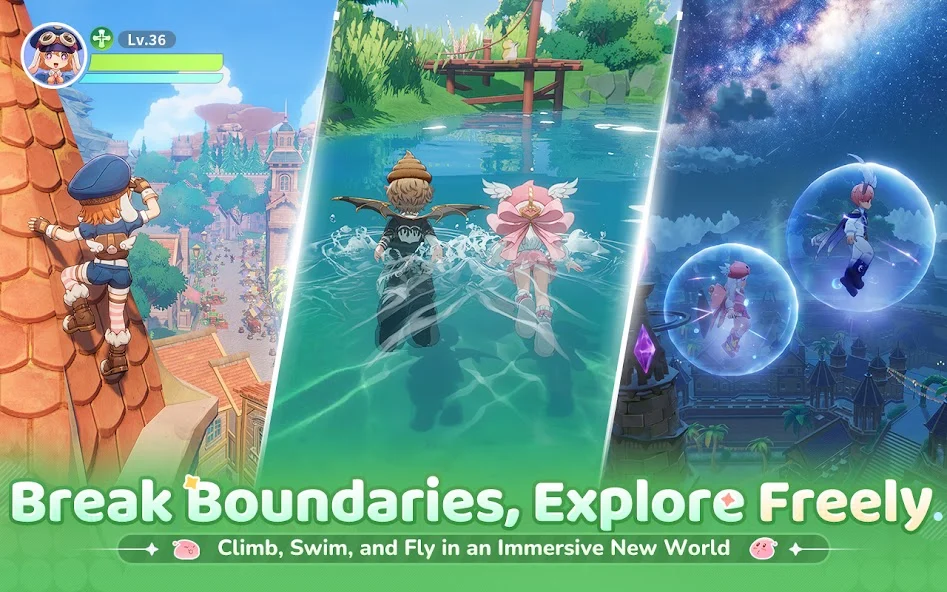
Official material presents a seamless 3D version of Midgard with climbing, swimming, and flying. It connects exploration to familiar Ragnarok systems rather than replacing them: parties still combine jobs, equipment still refines, and a player economy still gives drops value.
MVP monsters can become mounts after they are defeated, which turns boss hunting into a collection goal as well as a combat goal. The auction and street-vendor systems give traders another progression route. Appearance customization, guild activity, marriage, arena play, and GvG siege broaden the social layer. These systems look strongest when they overlap—for example, a party hunt producing an item that can fund the active job—rather than becoming isolated reward menus.
Convenience keeps progress moving
Offline hunting continues part of the resource loop while the player is away. Safer refinement means a failed attempt does not reduce the item's refinement level. Free stat and skill resets lower the cost of correcting a build. Together, those features remove several punishments associated with older MMORPG progression.
These features let the persistent world fit around work, school, and longer group sessions. Routine progress can continue between active sessions, leaving the player free to focus on exploration, bosses, trading, social play, and building the jobs they enjoy most.
A free entry point with room to choose your pace
Ragnarok: The New World is free to start across its supported services. Steam discloses in-app and chance-based purchases, while Google Play lists ads and random items. Players can therefore explore Midgard and learn the job system before deciding whether any optional purchase suits them.
For competitive modes, the clearest approach is to inspect the current shop and probability disclosures on the service being played because regional versions and live updates can differ. That keeps spending decisions tied to the client a player will actually use.
PC and mobile support is useful, with regional boundaries
The game has a standalone Windows route and a Steam release, so PC players do not need an Android emulator. Steam asks for 12 GB RAM at minimum, recommends 16 GB, and lists 30 GB of available storage plus broadband. Its operating-system, processor, and graphics fields are blank, so performance on a particular PC cannot be predicted from a complete official specification.
Official copy advertises synchronized progress across supported phone, tablet, and PC clients. Steam requires a Gravity account through the launcher. That convenience should be treated as an account-and-service feature, not proof of cross-region transfer.
Availability is fragmented. Taiwan, Hong Kong, and Macau launched through a separate service on 15 January 2026. The Southeast Asia service launched on 16 July 2026 except in Vietnam, and Steam followed on 26 July. Gravity's 7 August business update still described the wider global release as being prepared. Players should confirm their country and regional service before creating a long-term character.
Who should keep watching
Ragnarok: The New World is easy to recommend to players who want recognizable Ragnarok jobs and social systems with fewer irreversible build decisions. Job Freedom, synchronized devices, and offline progress fit players who alternate between short mobile check-ins and longer PC sessions.
Its strongest ideas work together: explore a broader Midgard, change roles without rebuilding an account, hunt MVP mounts with a party, and turn useful drops into progress through the player economy. Confirm the appropriate regional service, then choose a first job and start exploring.
Poradniki do tej gry
Classes
Ragnarok: The New World class guide — choose your first job by role
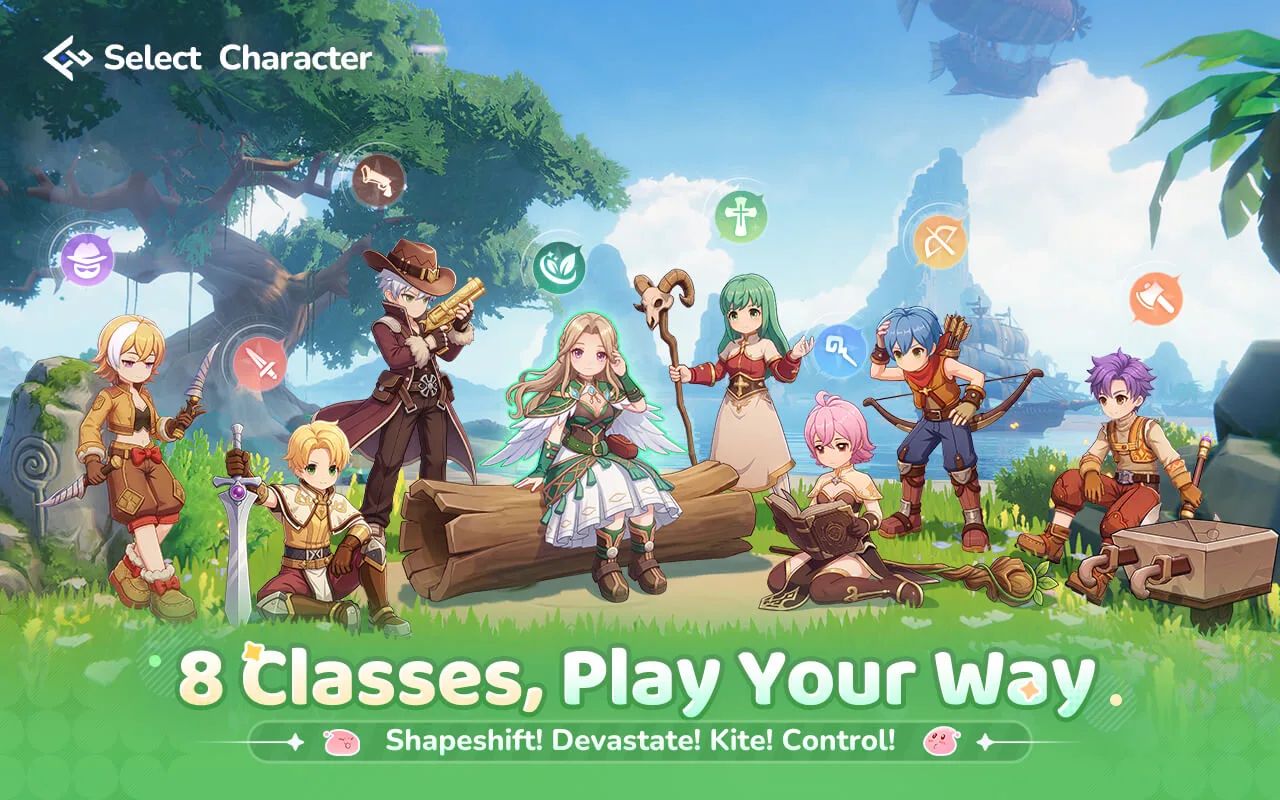
Match the seven available jobs to the range, party responsibility, and equipment path you actually want; Job Freedom lets you correct the choice later.
Advanced jobs
Crusader and Monk in Ragnarok: The New World — current second-job branches
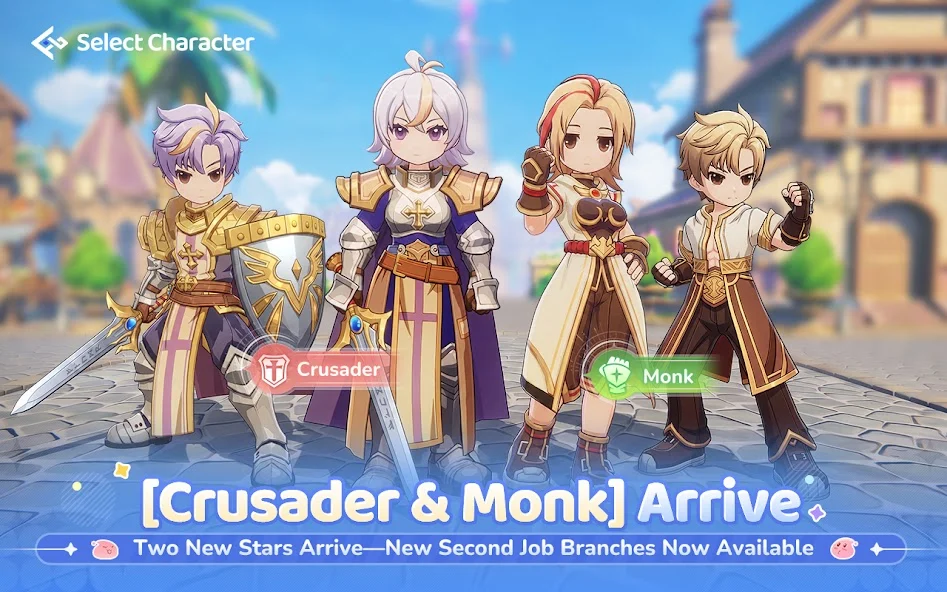
Current official storefront art adds Crusader to Swordman and Monk to Acolyte; choose the branch by party role and equipment plan.
Beginner guide
Ragnarok: The New World beginner guide — the first account decisions
Confirm the right service and account, pick a practical first job, then learn Job Freedom, refinement, offline hunting, trading, and parties in a safe order.