Progression
Ragnarok: The New World progression roadmap — what to improve first
Move from one reliable job to purposeful class branches, refinement, offline resources, trading, group content, and competition without dividing every resource at once.
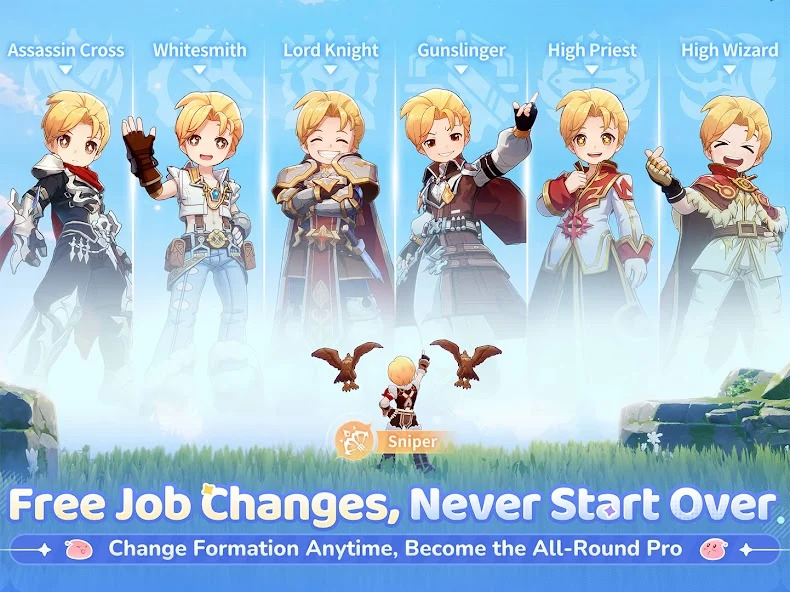
Progress efficiently by funding one reliable job, opening systems through the main route, and giving each resource a current purpose. The roadmap below uses system-readiness stages instead of unverified level numbers because unlock requirements can differ between regional builds and updates.
Roadmap at a glance
| Stage | Newly relevant systems | Priority | Stop condition |
|---|---|---|---|
| Account foundation | Region, server, Gravity account, first job | Protect account continuity and build one clear role | Ordinary quests and hunting are stable |
| System opening | Job Freedom, refinement, offline hunting, market | Test each interface once with low commitment | You can explain what each system changes |
| Build foundation | Weapon, stats, skills, defensive needs | Solve the active activity's main bottleneck | The target activity becomes reliable |
| Role expansion | Second job or advanced branch | Add a role for a specific task | Both roles have an equipment plan |
| Group progression | Parties, MVPs, guild activity | Learn responsibility and encounter patterns | You contribute consistently without emergency rebuilds |
| Economy and collection | Auction, street vending, mounts, customization | Convert surplus into chosen goals | Spending follows a plan rather than menu prompts |
| Competitive evaluation | Arena and GvG | Compare power sources and shop impact | You understand the cost of the level you want to pursue |
Stage 1: protect the account before building it
Confirm the correct service, server, and Gravity account. Southeast Asia and Taiwan/Hong Kong/Macau are separate services, while wider global availability was still being prepared in Gravity's 7 August update. Synchronized progress across supported PC and mobile clients should be used within the same account and service.
Choose a first job by role. The goal is a build that can complete routine activity without consuming resources across several weapons. Keep early spending conservative until you know which equipment survives the next part of progression.
Stage 2: open and test the real progression systems
Follow the main route and respond to feature prompts as they appear. The important systems are Job Freedom, refinement, offline hunting, trading, and party activity. For each one, perform a small controlled test:
- switch or inspect another job and compare equipment requirements;
- refine one durable item enough to understand the material flow;
- assign offline hunting to a specific shortage;
- inspect comparable market listings before selling;
- enter an accessible party activity with a declared role.
The purpose is to replace menu familiarity with decision familiarity. Do not copy a level milestone from another service when the active client provides the current requirement.
Stage 3: solve one bottleneck at a time
Name the next activity and the reason it fails. If the character dies first, improve survival. If time expires, improve damage or target selection. If the party lacks stability, correct the role or skill setup before buying more visible power.
Prioritize resources in this order:
- Account-wide utility that remains useful after a job change.
- The active job's main weapon and core equipment.
- Materials that solve the named content bottleneck.
- A reserve for a planned second job.
- Cosmetic or speculative alternatives.
Test again after a meaningful change. A higher number is useful only when it changes the outcome that blocked progress.
Stage 4: use Job Freedom without funding seven inventories
Stats and skills can reset freely, but equipment still gives each role a cost. Add a second job only when it answers a concrete need: support for party play, range for a difficult target, or a style you prefer enough to replace the first.
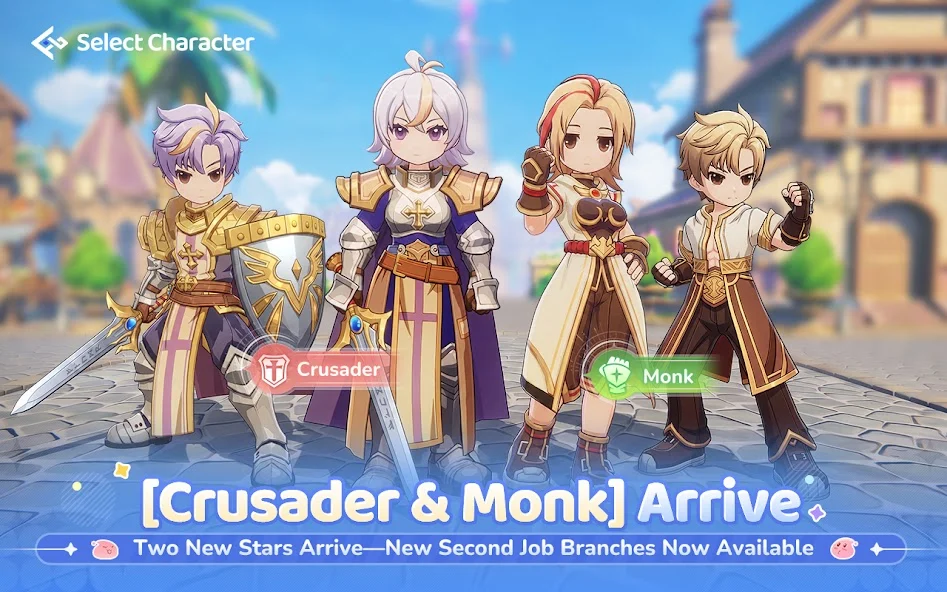
Advanced branches expand this decision. Knight and Crusader provide different Swordman directions; Priest and Monk separate support and combat priorities for Acolyte. Current storefront art confirms Crusader and Monk as available second-job branches, but exact regional requirements should come from the current client.
Stage 5: refine for lifespan, not for the advertised ceiling
Failed refinement does not reduce the current refinement level, according to official descriptions. That makes attempts safer, but it does not make materials unlimited. Evaluate an item by how long it will remain equipped and what objective the next improvement supports.
Use a stop condition: enough survival for a boss phase, enough damage for a time limit, or enough consistency for a routine activity. Do not treat +15 as a mandatory early target merely because it is advertised.
Keep a reserve. A new equipment drop, advanced branch, or party responsibility can produce more value than another attempt on an item that already performs adequately.
Stage 6: turn offline hunting into targeted income
Before leaving, select a target tied to the current shortage. At the next session, compare the result with the goal. If the assignment did not produce useful progress, change it.
Offline hunting should support active choices. Review the resulting items before feeding them into a market or upgrade system. The feature becomes wasteful when it fills storage with materials that have no relationship to the current build.
Stage 7: make the player economy serve the build
Auctions and street vendors can turn an off-role item into resources for the active role. Compare several relevant listings, but remember that listed prices show seller expectations rather than completed demand.
Before selling, check whether the item supports a planned job change. Before buying, state which activity the purchase should open or stabilize. Job Freedom increases the value of flexible equipment because an alternate role remains accessible on the same character.
Stage 8: enter MVP and group play with a job description
MVP hunts matter for combat rewards and for the mount-collection system. Parties and guild activity also create progression that cannot be reduced to a personal power score.
Know the selected job's responsibility before joining. A frontline must survive predictable pressure; a support must know when healing or protection matters; damage roles must preserve safe uptime. Add a new role between activities when the group has a recurring need, rather than changing impulsively after every failure.
Stage 9: evaluate competition and monetization together
Steam confirms in-app and chance-based purchases; Google Play also lists random items and ads. Before treating arena or GvG as a serious goal, inspect which power systems enter those modes, which resources come from ordinary play, and what randomized paid outcomes can change.
Do not label the economy harmless or pay-to-win from the store badges alone. A sound conclusion requires a current build, stated server, acquisition probabilities, and comparison of paid and unpaid progression. Decide the competitive level you actually want before spending toward it.
Weekly account review
At the end of a progression cycle, answer four questions:
- Which activity is the next target?
- What single limitation blocks it?
- Which system or item directly addresses that limitation?
- What result will tell you to stop investing and move on?
That loop keeps class freedom, offline gains, refinement, and trading connected to one plan instead of turning them into competing checklists.
Hướng dẫn liên quan
Classes
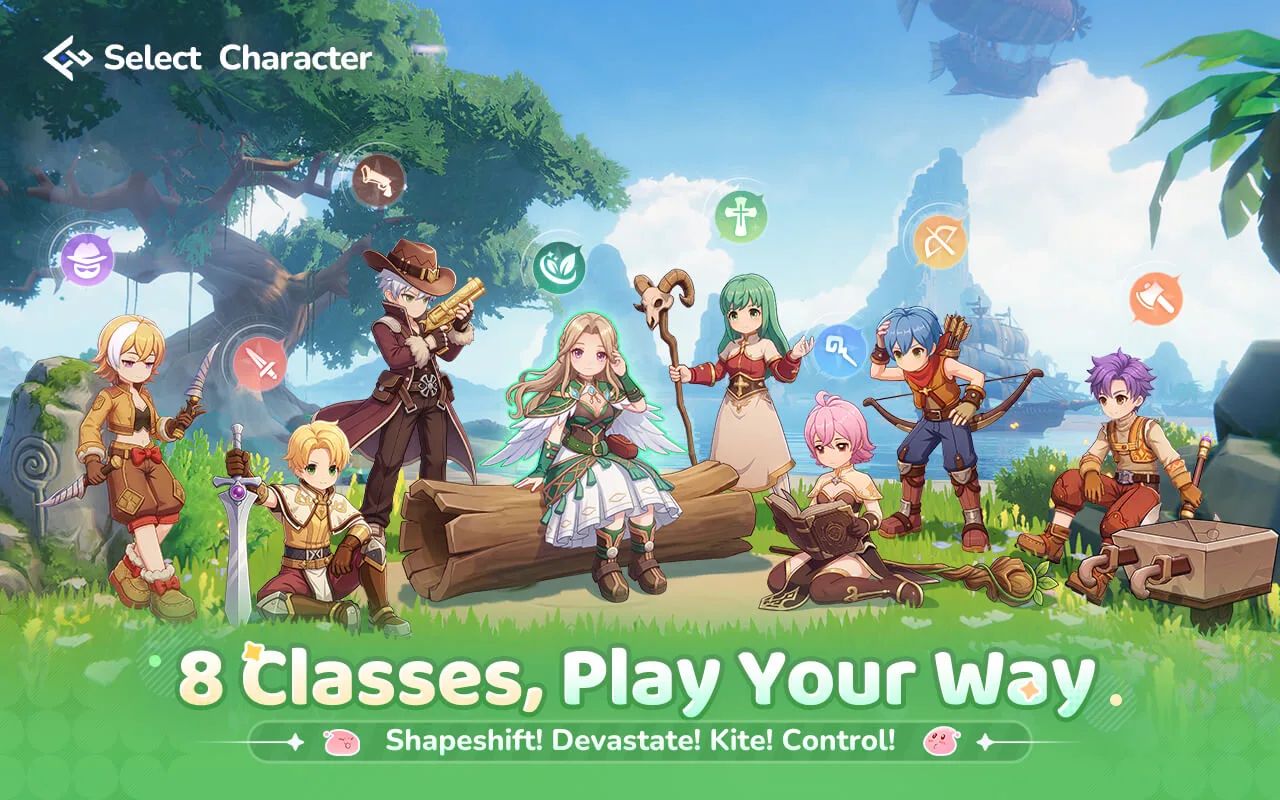
Ragnarok: The New World class guide — choose your first job by role
Match the seven available jobs to the range, party responsibility, and equipment path you actually want; Job Freedom lets you correct the choice later.
Advanced jobs
Crusader and Monk in Ragnarok: The New World — current second-job branches
Current official storefront art adds Crusader to Swordman and Monk to Acolyte; choose the branch by party role and equipment plan.
Beginner guide
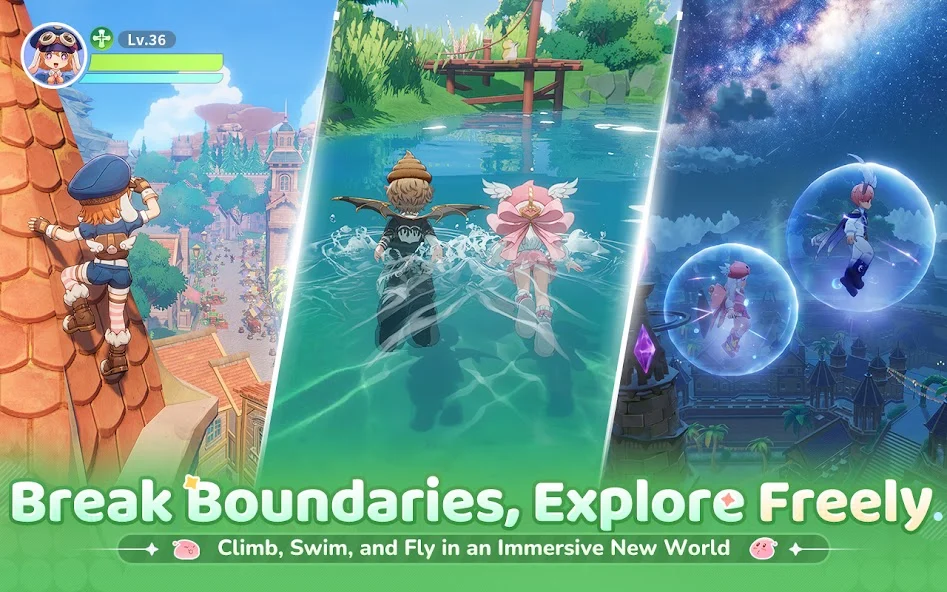
Ragnarok: The New World beginner guide — the first account decisions
Confirm the right service and account, pick a practical first job, then learn Job Freedom, refinement, offline hunting, trading, and parties in a safe order.