Classes
Ragnarok: The New World class guide — choose your first job by role
Match the seven available jobs to the range, party responsibility, and equipment path you actually want; Job Freedom lets you correct the choice later.

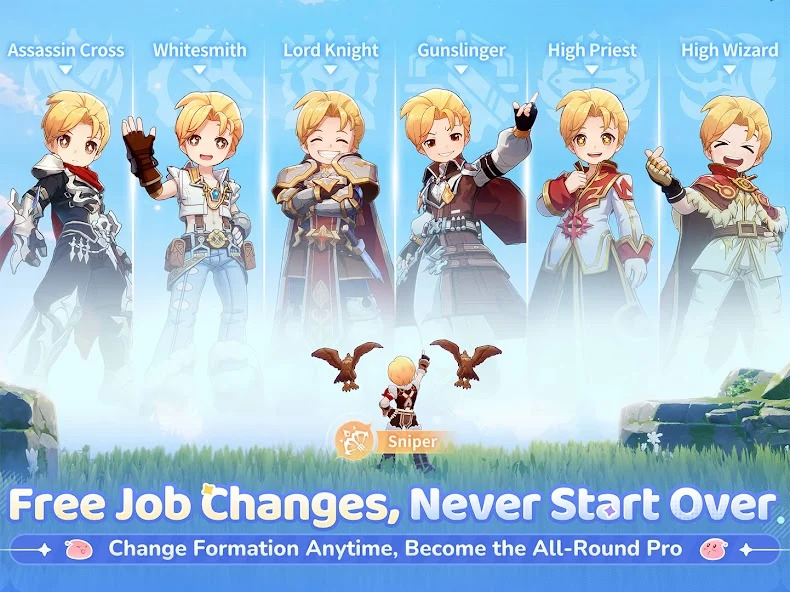
Pick Swordman for a durable frontline, Acolyte for healing and support, Mage for elemental area magic, Archer for conventional long-range physical damage, Thief for agile melee, Merchant for economy-linked melee utility, or Gunslinger for firearms. Job Freedom lets one character learn the jobs and reset stats and skills, so the first choice is a starting role rather than a permanent account lock.
Quick class decision table
| If you want… | Start with | Main caution |
|---|---|---|
| Heavy armor, swords, shields, and frontline durability | Swordman | Alternate roles still need their own suitable equipment |
| Healing and protection in parties | Acolyte | Support play carries responsibility for timing and positioning |
| Elemental spell choice and ranged area damage | Mage | Matching element and encounter matters |
| Bow range and elemental arrows | Archer | Spacing is part of survival |
| Fast dagger-based melee | Thief | Less natural frontline durability than Swordman |
| Trading identity plus axes, blunt weapons, and carts | Merchant | Do not assume every market action is class-exclusive |
| Pistols or shotguns | Gunslinger | Firearm choice is confirmed; constant combat swapping is not |
Swordman: the clearest frontline
Gravity's English material spells the job Swordman. It emphasizes heavy armor, high health, swords, and shields. Start here if you want to absorb pressure at the front and prefer durability over fragile burst damage.
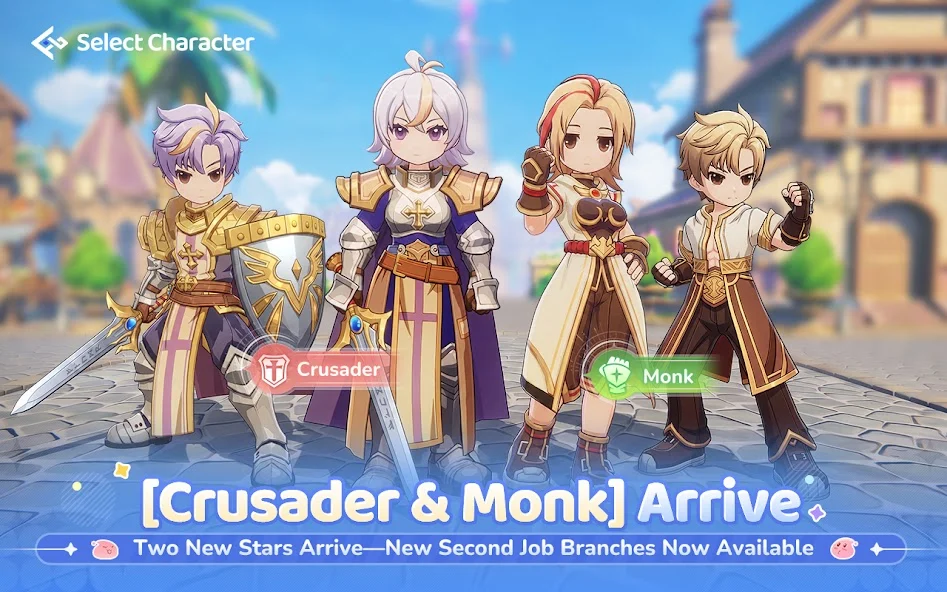
Knight is the established offensive second-job route. Current official storefront art also presents Crusader as a newer Swordman second-job branch, with a more defensive visual identity built around shield and armor. The exact branch requirements can differ with service updates, so follow the requirements shown by the current regional client instead of a copied level claim.
Acolyte: support first, with a newer combat branch
Acolyte is the direct healing and protection choice. It also uses holy damage, but its clearest value is keeping a group stable. This is a strong first job for players who enjoy party responsibility and a weak choice for anyone who wants to ignore allies and focus only on personal damage.
Priest is the established support advancement. Current official storefront art also presents Monk as an additional Acolyte second-job branch, giving the base job a more combat-focused alternative. Decide whether the account needs dependable support or active close-range pressure before committing equipment to the advanced role.
Mage: elemental planning
Mage attacks from range with elemental magic. The official class showcase explicitly frames element selection as a way to counter monsters, so the job asks more than simply equipping the highest visible power item. Learn which element the current target resists or takes extra damage from.
Wizard is the familiar advancement. Mage suits players who enjoy spell planning and area control; it is less suitable when a player wants the simple physical line of Archer or the durability of Swordman.
Archer: range with elemental ammunition
Archer has the clearest traditional bow identity and is presented as the longest-range conventional weapon job. Elemental arrows provide target matching without turning the class into a full spellcaster.
Hunter is the established advancement. Choose Archer when maintaining distance and preparing the right ammunition sounds satisfying. If the visual and mechanical appeal is specifically firearms, Gunslinger is the cleaner starting point.
Thief: speed and isolated targets
Thief is the agile dagger job associated with Morroc. Gravity's class page emphasizes high agility, attack speed, and dealing with isolated groups rather than holding a defensive line.
Assassin is the established advancement. Thief fits players who want mobile melee pressure and accept a smaller safety margin than Swordman. Before investing deeply, test whether you enjoy staying close to targets while relying on movement and speed.
Merchant: combat tied to the economy
Merchant uses axes or blunt weapons and is visually tied to carts and helpers. Its identity is also connected to Alberta and trade, making it the class that best represents Ragnarok's player-economy fantasy.
Blacksmith is the established advancement. Choose Merchant when market decisions are part of the appeal, but keep the claim precise: the game supports auctions and street vending for its player economy, and the official class identity is commercial; that does not prove that every trading feature is exclusive to Merchant.
Gunslinger: pistols or shotguns
Gunslinger is the dedicated firearm job. Gravity's official showcase says Gunslingers can choose between pistols and shotguns. That is enough to distinguish it from Archer and Mage without inventing a permanent mid-combat weapon-switching mechanic.
Pick Gunslinger for firearm style and a weapon choice within the role. Compare the resource and equipment implications shown in the client before building both weapon paths at once.
How to use Job Freedom without wasting gear
Use the reset freedom to test controls, range, and party responsibility. Treat equipment as the real commitment. A useful sequence is:
- Fund one job that can clear routine activities.
- Test a second job only when it solves a specific need or offers a playstyle you genuinely prefer.
- Compare weapon and stat requirements before moving scarce materials.
- Keep a reserve until the second role proves useful in actual content.
There is no credible universal launch tier list here. A ranking would need separate PvE, farming, MVP, arena, and GvG criteria, plus a stated gear and spending baseline. Choosing by role is more useful until that evidence exists.
Guides associés
Advanced jobs
Crusader and Monk in Ragnarok: The New World — current second-job branches
Current official storefront art adds Crusader to Swordman and Monk to Acolyte; choose the branch by party role and equipment plan.

Beginner guide
Ragnarok: The New World beginner guide — the first account decisions
Confirm the right service and account, pick a practical first job, then learn Job Freedom, refinement, offline hunting, trading, and parties in a safe order.
Progression
Ragnarok: The New World progression roadmap — what to improve first
Move from one reliable job to purposeful class branches, refinement, offline resources, trading, group content, and competition without dividing every resource at once.