Beginner guide
Ragnarok: The New World beginner guide — the first account decisions
Confirm the right service and account, pick a practical first job, then learn Job Freedom, refinement, offline hunting, trading, and parties in a safe order.
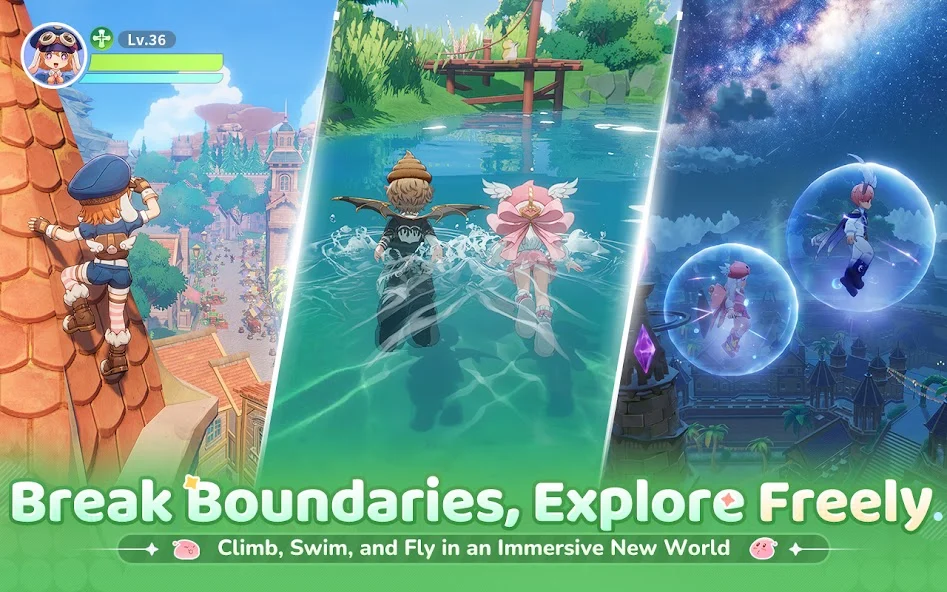
Before creating a long-term character, confirm the regional service and Gravity account you intend to keep. Then follow the main quest until Job Freedom, refinement, offline hunting, and market prompts appear. Test each system once before spending heavily; the game makes stat and skill resets flexible, but equipment and upgrade materials still create commitment.
1. Confirm country, account, and server first
The service is not confirmed worldwide. Southeast Asia is live except Vietnam. Taiwan, Hong Kong, and Macau use a separate service. Gravity's 7 August 2026 business update still described the wider global release as being prepared.
Steam requires a Gravity account through the launcher. Official copy advertises synchronized progress on supported phone, tablet, and PC clients, but that does not prove that characters move between separate regional services. Before advancing:
- confirm that the client serves your country;
- sign in with the account you want to use on every supported device;
- check the selected regional service and server;
- avoid assuming a purchase or character can transfer to another service.
2. Choose a first job that can explain its purpose
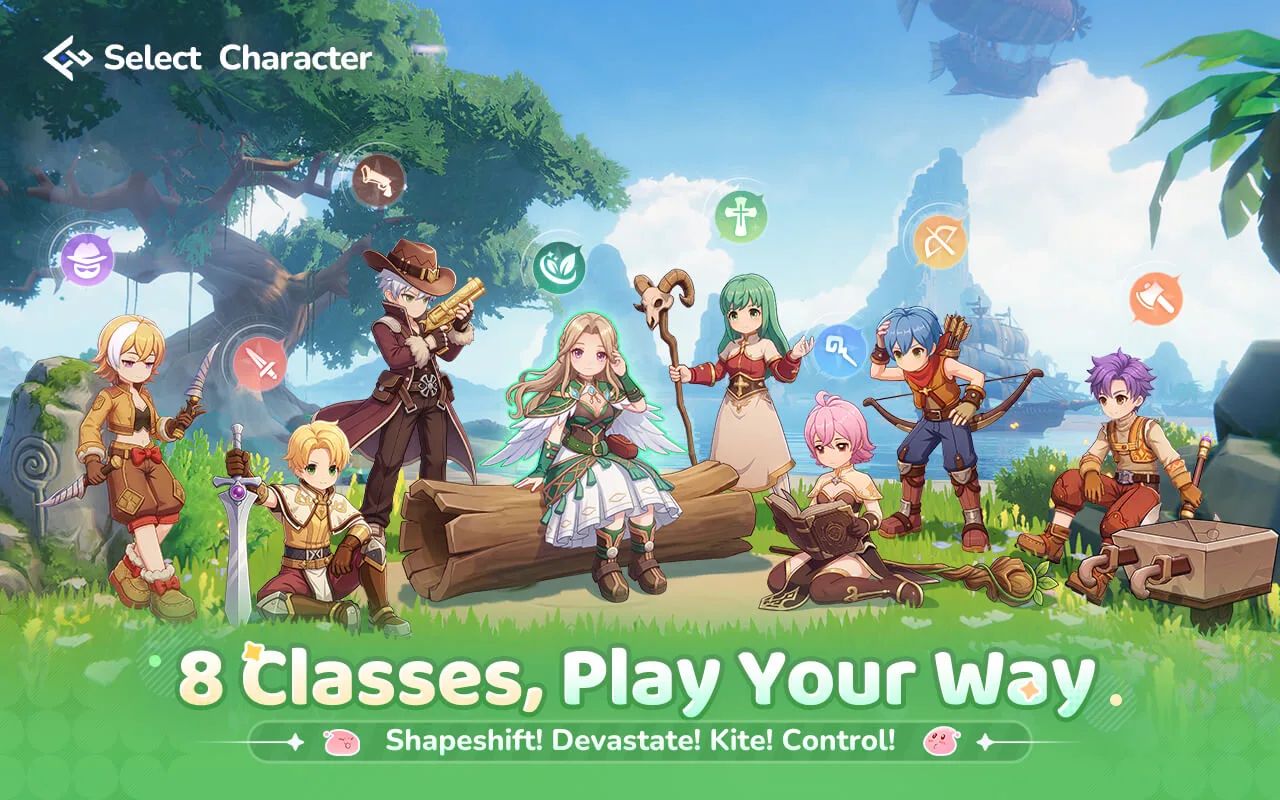
The seven available jobs cover clear roles. Swordman is the durable frontline; Acolyte is healing and support; Mage handles elemental magic; Archer provides bow range; Thief is agile melee; Merchant links melee utility to the trading fantasy; and Gunslinger uses pistols or shotguns.
Pick one role you can describe in a sentence. “I want to heal parties” is a better first decision than choosing the most dramatic artwork. Job Freedom lets the same character learn jobs and reset stats and skills, so a mistake is recoverable. The cost appears later in weapons, armor, and materials, not in the reset itself.
3. Use the main quest as the interface tutorial
Follow the main route until the game introduces each major interface. When a system appears, stop long enough to answer one question:
- Job Freedom: what changes when you switch, and which equipment no longer fits?
- Refinement: which item is likely to remain equipped long enough to justify materials?
- Offline hunting: what target or resource will run while you are away?
- Auction and street vending: what do comparable listings show, and is the item useful to another planned job?
- Party content: what does the selected job contribute to the group?
Exact unlock levels can change between service builds. Use the quest and feature prompt displayed in the active client rather than a level copied from an older region.
4. Build one funded role before a second
Free resets do not create free equipment. Give the first job a coherent weapon, stats, skills, and survival plan. Use it to clear ordinary quests and resource activities before preparing a second role.
Add another job for a reason: a group needs support, a boss favors range, or another combat rhythm is more enjoyable. Do not divide scarce resources across every class simply because the menu allows it. A working primary build plus a purposeful secondary build is more useful than seven unfinished experiments.
5. Refine with a stop condition
Official copy says failed refinement does not reduce the item's refinement level. That removes a severe penalty, but the attempt can still consume resources. Before refining, decide what success is meant to change: surviving an encounter, meeting a party expectation, or improving routine clear speed.
Prioritize an item that belongs to the active build and is unlikely to be replaced immediately. Stop when the current objective becomes comfortable. The advertised +15 ceiling is a capacity, not proof that every temporary item should be pushed there.
6. Give offline hunting one assignment
Offline hunting is most useful when it supports a named shortage. Choose a target tied to the next improvement, then inspect the return at the next login. If the result does not advance that objective, change the target rather than extending the same routine.
Passive accumulation should reduce repetitive work around an intentional build. It should not decide the account's direction. Review new materials before spending or discarding them.
7. Check the market before disposing of uncommon items
The game advertises player auctions and street vending. Before getting rid of an unfamiliar item, inspect comparable listings and ask whether a planned job switch could use it. A visible asking price is not proof that the item sells at that value.
Use the market to convert irrelevant drops into a defined upgrade. Avoid buying simply because an item has a higher headline number; compare the stat or effect that solves the current problem.
8. Enter group content with a clear role
A party benefits from jobs that know their purpose. Swordman can handle frontline pressure, Acolyte can stabilize allies, and damage jobs need positioning that lets them keep attacking safely. Read the active skills and know which button answers the party's main danger.
Job Freedom is most valuable between activities. During an encounter, the selected setup still needs one coherent role. Practice the role in lower-risk content before treating a class change as a solution to every difficult fight.
9. Separate collection, social, and power goals
MVP monsters can become mounts, while customization, marriage, and guild systems provide social goals. These are valid reasons to play, but they are different from increasing combat power.
Start each session with one goal: improve the active build, pursue a mount, work the market, or join group content. This prevents every menu from becoming an obligation and makes it easier to judge whether offline hunting and purchases support what you actually enjoy.
A safe first-session checklist
- Correct country, regional service, server, and Gravity account confirmed.
- One first job chosen by role.
- Main quest followed until the next named system prompt.
- One stable build funded before preparing alternatives.
- Refinement used only with a clear objective.
- Offline hunting assigned to a known shortage.
- Market checked before discarding unusual drops.
- Paid and randomized purchase probabilities reviewed before spending.
أدلة ذات صلة
Classes
Ragnarok: The New World class guide — choose your first job by role
Match the seven available jobs to the range, party responsibility, and equipment path you actually want; Job Freedom lets you correct the choice later.
Advanced jobs
Crusader and Monk in Ragnarok: The New World — current second-job branches
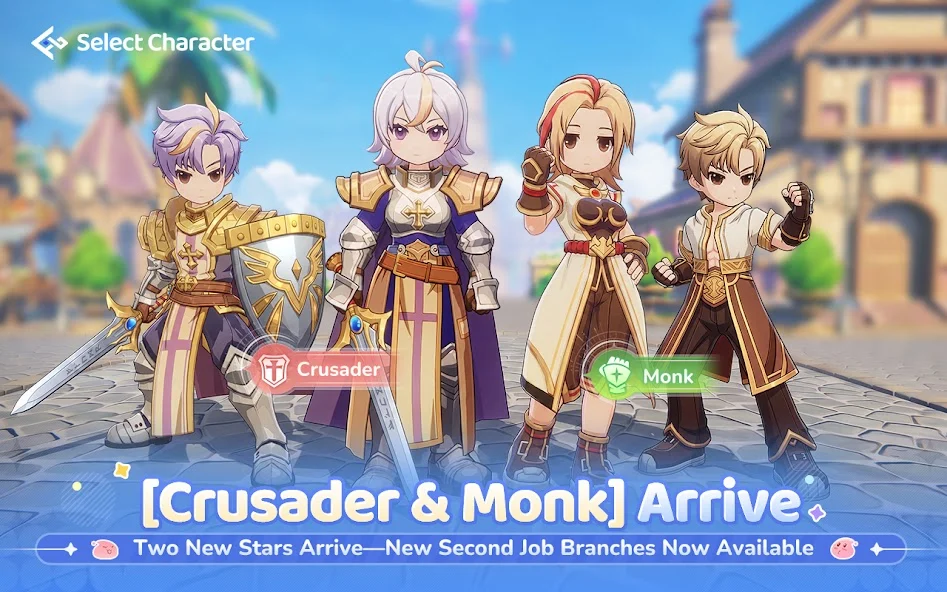
Current official storefront art adds Crusader to Swordman and Monk to Acolyte; choose the branch by party role and equipment plan.
Progression
Ragnarok: The New World progression roadmap — what to improve first
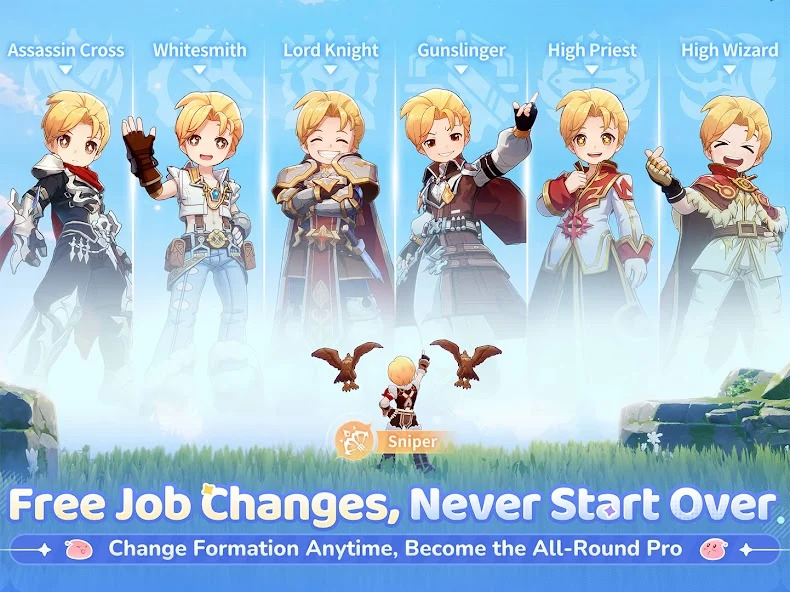
Move from one reliable job to purposeful class branches, refinement, offline resources, trading, group content, and competition without dividing every resource at once.